Methane Wars: A Fable — Chapter Eight

good cow wordpress

Methane Collector

FemCad had a subsidiary: the Methane Collection Service. If FemCad was like the IRS, then the Methane Collection Service was like the postal service except in reverse: a civil service union charged with collecting methane and other gases. But everyone still called them FemCad. They were supposed to be the softer side of FemCad. Customer service oriented, but I don’t think it worked out that way. They ended up being the reviled face of a hated bureaucracy. I used my connections to get a transfer to the Methane Collection Service. If I could not find the source, I could witness the impacts firsthand.

A day in the life went something like this:

  • 811 Dunsing Street. Should be three canisters here. Janice probably forgot again. People forget. Kind of like forgetting recycling. But unlike recycling, forgetting your methane canisters is not allowed.

So I knock. Because some people forget and some people “forget.”

“Hi Janice. Forget something today?”

“Oh my, just left it in the kitchen. Be right back.”

“No problem. Just trying to stay on schedule.”

“Here you go, three canisters.”

Some collectors are not so generous. If you forget, they will claim they tried to knock. Or maybe they are just lazy. Then they just write you up with a warning. Happens a lot because people work and aren’t always home. Three strikes and you were out. Fined, or worse.

Of course, you could register for an exemption if you were out of town or sick, but those were scrutinized closely. Especially if you claimed an illness exemption. Better off registering a claim for a technical malfunction. The penalties were smaller and there were no nasty medical exams to deal with.

  • 815 Dunsing Street. Jones had missed his quota a few too many times. He’d never missed a collection but his volumes were too low. He’d been fined. That doesn’t seem to help. He’s claimed technical issues and medical issues, had his quota reassessed. FemCad said his quota was right on. They don’t exactly provide a rigorous appeals process.

Jones was the recipient of one of the new monitoring units. Kind of like the ankle bracelets used for house arrest. He couldn’t take his collection unit off without an alarm going off. The average person was allowed to take their unit off a few hours a day. Not Jones. He had to wait until I came by and exchanged the canister.

“Good Morning, Jones. How are you?”
“Good as can be expected with a cold poker up my ass.”

“Fair enough. Can you hold you shirt up there? Let’s get this new can in here. Oops. Sorry about that. The cans are a little cold this morning.”

“How much longer do I have to wear this thing? Could you take it off today? I got a date. Be nice not to have to wear it on a first date.”

“Can’t take it off. Need the right code. And I don’t know how long you have to wear the monitor. I think that information should be in the judgment papers.”

“Can’t you tell?”

“No, my hand held just tells me details for today’s route. When your term expires I will be instructed on removing your monitor. OK, See you next week.”

Jones wasn’t always this pleasant. The first couple pickups were rough. He was very angry and took it out on me. I almost had to call the real FemCad goons. Nothing really I could do for him. I didn’t know the details of his case. I could help him get around the rules but that wasn’t worth it. The punishment for aiding and abetting was pretty serious. I wasn’t ready to do that.

I’ve had a lot of people yell at me. No one likes to get warnings. I’ve never been physically assaulted but other collectors have. Some have ended up in the hospital. They didn’t issue us guns after that but we could carry mace or a Taser if we like. I carried a Taser. I’ve never used it.

You could actually report someone for verbally assaulting you as well. Just like getting a warning. No one ever reported verbal abuse. You’d have to do it all the time. Probably just make the abuse that much worse. Probably provoke a physical assault.

  • 906 Dunsing. An exemption. I wish they would tell you what the exemption was for. Not that it matters to do my job. I suppose knowing might color the collector’s view of a person. That would not help customer service.

There’s about a five percent exemption rate if you didn’t include children and the elderly. I don’t know if that was a lot. I mean, what do you measure it against? I know it wasn’t easy to get an exemption. Most people who had any legitimate reason for an exemption usually end up with a reduced quota instead of an exemption. FemCad didn’t like anyone getting away not wearing a CU.

I don’t know what the exemptions were for each person, but I could see as well as the next. And I hate to say it but there were certainly bribes occurring. Obviously FemCad claimed they didn’t discriminate but the pattern was hard to deny. Wealth had its trappings and you could see them. And where there were trappings there were exemptions.

Posted in Methane Wars | Tagged , , , , , , , | Leave a comment

Methane Wars: A Fable — Chapter Seven

good cow wordpress

The Bureaucrat

Human methane collection was real. I had to figure out what was going on. There was more to this than met the eye and there was a lot to meet the eye.

It took nine months but with my background in the methane collection research field I was able to get a job with the Federal Methane Collection Department (FMCD, or FemCad to the masses). I reported to Abe Brown, one of the regional directors out of Minneapolis. My job was to track quotas and exemptions and other statistics. A couple months after I started we were going over numbers in the director’s office. It went something like this.

“Those losers over in the IRS think they have a tough time with tax collections,” he said. “If all I had to do was track down money, I’d be set. Ha! That’s the easy life.”

“I’d think this would be easier,” I said. “No complicated tax codes. Pretty straightforward.”

“Not quite. You think people don’t like paying taxes. See what lengths they’ll go to avoid giving methane. Trying to go off the grid. Fake identifies. Pretending to be their dead grandmothers.”

“Can’t they file exemptions?” I said. “There’s actually quite a long list. You can even file for special exemption.”

“Everybody wants to be an exemption,” said Brown. “The shit people will try to get exempted is a bit unnerving. Woman getting pregnant. Self-inflicted rectal wounds.”

“But wouldn’t more generous exemptions perhaps ease the push back? This isn’t an easy thing to ask.”

“Give them an inch and they’ll take a mile. Look at what people will do with the rules we have now. They’ll try anything. I’ve seen people even try obstructions. Well, that wasn’t pretty and no one was fooled. Probably good they failed the exams. Produced some interesting emergency room visits.

“A lot of the recent attempts at exemption center around infections and irritations or claims that the body is rejecting the collector, which certainly does occur but can usually be corrected. But if you’re trying to get an exemption for an infection that means you’ve giving yourself an infection. That can’t be good. People have died.

“Tracking everyone was actually pretty straightforward until the quotas came along. At first you were exempted or you weren’t. And even though the amount of gases collected was tracked, as long as you gave some volume you were fine.” And so Abe went on.

Then projections were not being met and things changed. I don’t know who set these projections but political promises were in jeopardy. Remember, we were tracking collection. That gave us history and with history we had predictability and with predictability we could set quotas. And so quotas were set.

But if we set quotas based on historical data we would get the same inadequate historical results. The next logical step was to set a quota tailored to the individual. Each individual would be tested over two days to determine what their output really was. Now that was a bureaucratic nightmare that led to some amazing findings.

Deception. Cheating. Lying. No one was taking this seriously and how could you blame them? They were giving just enough to keep us off their back. They weren’t even remotely wearing their collectors at all times. But FemCad took it seriously. They had less of a sense of humor than IRS goons, and to them it was bullshit, a slap in the face to those who wore their collection units dutifully.

If people wanted to play games like that then FemCad would too. So they got the quotas and just a little extra incentive. Took a page from the IRS and criminalized gas collection avoidance. If people didn’t want to take it seriously, FemCad would help them out. Fines for not meeting quotas. Jail time for repeat offenders.

And guess what? Collections skyrocketed. FemCad met projections for the next six months. And the revenue from fines funded research on dietary optimization. They were very close to issuing new guidelines on diet to improve output. The research team thought dietary changes would increase output by fifteen percent if they could roll dietary guidelines out.

Back to my reasons for joining FemCad. Who was behind all this? After a year with FemCad, I still couldn’t find any links back to who was pushing this so hard. FemCad just took marching orders. Orders came from the Feds and they followed them.

I have to admit that I gave up on my quest to find the power behind FemCad. Honestly, FemCad’s IRS-like tactics scared me. My answer-seeking spirit was crushed by fear of FemCad goons. But this spirit was replaced by my growing belief that something that was so vehemently enforced must be resisted. If I felt this way, so did others. I began to think those searching for exemptions were only a small part of the resistance. I needed to get to the front lines to see what was going on. I didn’t have any connections to the street but I did have connections to the methane collection goons and they were very much on the street.

Posted in Methane Wars | Tagged , , , , , , , , | Leave a comment

Sofas, Beets and Belief: Choose Wisley

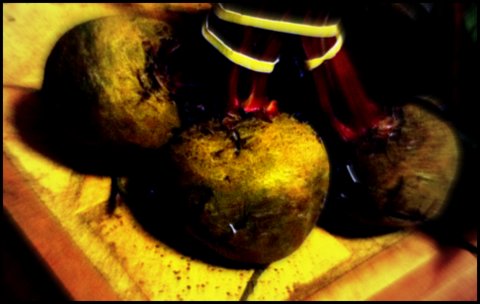
beet2aI helped move a sofa into a basement today with small doors and annoying landings. I was positive the sofa was going to be stuck on the landing forever, or until I broke the legs off. We had to back it out all the way, twice.

In fact the second backing out was almost as perplexing as the getting it in the third time. We stared at it a long time before we got it back out. Thank goodness for some spatial awareness.

But what saved the day was some patience or stubbornness. I don’t even care which one it was. Good thing the sofa looked good in the room. That baby is not leaving anytime soon.

Good thing I had some beets for dinner with all their iron-rich goodness. Need to replenish after that mental and physical adventure. Just eating a beet makes you feel better. Before it’s even had a chance to be absorbed by your body, you feel better. It’s like a beet super power. Like when Popeye would eat his spinach and his muscles would grow immediately. Total mind game.

But mind games like that are good. It’s an attitude that the situation is getting better immediately simply by making the good choice. The belief is as important as the physical benefit, which in the case of the beets is certainly delayed. Unlike chocolate where the psychological and physical benefits are right there.

The mental act of choosing to act is as important to you as the benefits of the actual act. Like choosing to exercise. You decide to go and exercise. Hooray! Then on the way there you get interrupted. True, you didn’t get the exercise but the choosing to act has already occurred.

Now of course, if you keep choosing to act and are always being stopped from doing so, you have a different problem. The choice has become a lie. And we don’t want that. It’s like buying all those fresh vegetables and throwing them all out every couple weeks when you don’t eat any of them.

So don’t lie to beets, man. They don’t like that. Besides beets can last for months if kept right. You’re going to have to lie a lot to throw them out. Buy some brussel sprouts instead. They’re used to being thrown out. In fact you could just buy them and throw them out immediately. Just cut out the waiting period.

Just kidding about throwing out the brussel sprouts. Don’t waste food. That’s not cool.

Posted in Food, Personality | Tagged , , , , , , | 4 Comments

Methane Wars: A Fable – Chapter Six

good cow wordpress

The President

The intensity built slowly. Environmentalists and economists lauded the Methane Collection Measure. Civil liberties groups denounced it. The average Joe could not fathom the reality and had no unified voice with which to alter the mindset of their elected officials. The bill passed, however slimly, unaltered through the house.

President Taylor took time to weigh it out. No doubt debating the politics of it. On which side of the vote was political death? He had the option to veto it. The House and Senate could not override his veto. They would hang success or failure from his neck.

The President made his choice. He would announce his decision on national television. I watched like everyone else. Except that I knew, I just knew what he would do. Here’s what he said.

——-

So it’s come to this. The failure to wean ourselves from fossil fuels for ten, twenty, thirty, forty years. Despite the warnings of limited supply. Despite the constant geo-political struggles and wars and damage to foreign policy, we could not break our addiction to fossil fuel. We could not give it up. Democrats made efforts. Failed. Republicans made efforts. Failed. Even bipartisan efforts. Failed.

What do the Vulcans say? “The needs of the many outweigh the needs of the few or the one.” Well, I guess we’ll have to have Taylor’s corollary: “The needs of the many outweigh the rights of the few or the one.” This is the hardest decision I have ever had to make. I have chosen to follow the rule that every elected official should follow but never does: “The needs of the people outweigh the need to be reelected.”

I asked myself, is it more justifiable as a temporary measure? Like wartime sacrifice. Like rationing for the greater cause. I believe the answer is “yes.” I came to the conclusion that yes, this is like wartime powers. But this is not war. This is bigger. This is survival.

There is concern that this will not be temporary, like levies to build public projects that never go away. And that is a fair concern.

But I assure you that there is a sunset clause. When certain energy parameters are met, the mandatory collection will cease. Our researchers are projecting that will be no more than five years.

This is a sacrifice we all must bear. And we will. And we will make it through. And we will be a stronger nation in the end.

So in the name of preserving this great country, I sign into law the Revision to the Coal Elimination Act.


And so he did. Prohibition must have been like this. Few could believe the government had really done it. People were in shock. “Methane Wars” was the headline du jour.

What shocked me, even though it shouldn’t have, was how quickly they begin to implement. For a bill that was quickly passed and quickly signed, the infrastructure and newly created federal agency were up and running in a couple months. It took some time to roll it out to everyone, but the green uniforms of the Federal Methane Collection Department were visible in most major cities within six months.

Meanwhile, there were dozens of major civil liberty law suits. All were rapidly heard and quashed by the Supreme Court. They backed the President’s notion of wartime powers: this was indeed necessary for the survival of the country. The Methane Wars had begun.

Posted in Methane Wars | Tagged , , , , , , , , , | Leave a comment

Methane Wars: A Fable – Chapter Five

good cow wordpress

The Lobbyist

I became obsessed with the methane collection activities. Whether fate placed me there or whether my subconscious mind, affected by having a methane collection unit shoved up my ass, led me there, I don’t know. I kept my job at the research firm. I had insight into ongoing activity, at least from that perspective. I didn’t have any further insight into the workings of Humachinix, but I was getting the sense that they were just pawns whose job it was to be the face of scientific research just as UnGastro was a manufacturer fabricating someone else’s scheme. Layers.

Data continued to be gathered from Humachinix, the anti-coal lobbies, and others. Though no directive or official memo admitted it, we were indeed collecting data to make a case for human methane collection. We were pawns too. We would supply the ammo but we would not fire the gun. And as of yet, it was unclear who owned the gun. Though it became clear who would fire the gun: a congressional lobbyist from the high-powered law firm of Jenkins and Scott by the name of Daryl Forrester. Daryl was going to fire the methane-powered gun on behalf of Senator Kramer.

Our deadline for providing the best data we had was set. Not so coincidently, that deadline was set the day after congressional hearings had been set to debate the renewal of the CEA.

I managed to get into the congressional hearing, which was less densely attended than I would have guessed. Perhaps my obsession with the matter led me to believe it would or should have garnered more attention.

I shouldn’t have been surprised when the first presenter in the hearing was Daryl Forrester. I obtained minutes from the hearing later, and this is what Daryl had to say:

“Honored Senators. The numbers I am about to show you are not for the faint of heart. But to walk away now would to be to walk away from humanity, and I know you will not do that.

“Most of you were here when the Coal Elimination Act was passed. One of the boldest actions taken in the last 100 years. I personally thank you for that.

“But Senators, it turns out we need to be even bolder. The coal crises identified five years ago hasn’t gone away. Despite the bold measures put in place for aggressive delving into alternate energy sources, we’re running out of time. The measures in place currently won’t be sufficient to deal with the imminent shutdown of the coal energy industry. In five years, coal power as we know it will cease to exist. The report being passed out right now outlines the time lines and impacts of this imminent shutdown. The effects on this country would be beyond catastrophic. When the coal industry ceases to exist, so do we cease to exist as a viable nation.

“We have to replace 600 coal plants. And we can do that. No, we can’t replace them all at once and certainly not in five years. But if we start to incrementally replace capacity right now we can extend the imminent shutdown of the coal industry several years. But several years is only the briefest of reprieves. It only gives us the chance to take a deep breath and move boldly and aggressively.

“Now that I have gotten your attention with this catastrophically grim news, I turn to the equally stunning solution to this crisis. An almost miraculous solution but one that requires unflinching commitment, unwavering commitment, a level of dedication to this country you may never have thought possible.

“A proposal for action is now being handed out. This proposal reiterates a need for continued commitment to solar and wind and other alternative powers and continued commitment for significant improvements in energy efficiency. All very important at a time when everything is so important.

“I save the most important for last. I harken back to the Coal Elimination Act and the third key provision in that act. The Bovine Methane Collection Measure. The measure that provided for the mandatory collection of all gases from bovine used in the agricultural sector.

“On page 153 of the report you will notice figures that indicate just how huge a success this measure has been. Just five years into this program and the bovine sector of the ag industry is entirely energy self-sufficient and actually exports energy to other agricultural areas. That’s roughly 0.5 percent of the GDP. In fact the massive success here has been instrumental in delaying the imminent shutdown of the coal industry for several years.

“But it has not been enough. Other alternate energy efforts continue, but with high capital expenditure and lengthy project time lines they are unlikely to be ready in time.

“With the success of the Bovine Methane Collection Measure we have the blueprint in the palm of our hands. WE are the solution. The potential of the human race to provide its own energy is enormous.

“We at the Coal Preservation Institute have extensively funded research into the feasibility of The Human Methane Collection Project as well the development of first generation devices to collect methane and other gases using the latest technology.


So the testimony went on with many hours of questions and answers. Holes were poked. Holes were filled. Every time a senator tried to ratchet down the doomsday rhetoric, Daryl ratcheted it back up.

This was all about human methane collection. Well, really it was about money. Everything is about money. I don’t know how much money flowed to which campaign funds. I imaging a great deal since a few months later a bill was introduced to extend the Coal Elimination Act with a few tweaks. The key tweak being that the Bovine Methane Collection Measure was amended to the Bovine and Human Methane Collection Measure. They would begin collecting methane from humans immediately.

The crux of the human methane collection revision was buried in an addendum that outlined the phased roll out of the collection system: the crux was that participation was mandatory. Mandatory.

The addendum went on to list the stringent protocol for exceptions with a panel set up to hammer out the penalties for non-compliance, enforcement, etc. The addendum also established a new federal agency with funding to implement the methane collection.

The bill made it quietly through committee. When the Senate debated the bill it was presented as a straightforward renewing of the Coal Elimination Act. God knows how many senators read it. A small backlash came from some civil liberties groups who grasped the import of the amendment but little was made of it. It wasn’t until the clone bill was introduced into the House that someone in the media finally sniffed out the amendment and made a stink.

Posted in Methane Wars | Tagged , , , , , , , , , | Leave a comment

What if I Don’t Take the Road Less Travelled?

road2What if I don’t take the road less travelled? Will that make all the difference? What if I stay on the road most travelled?

There’s obviously advantages to staying on the road most travelled otherwise there wouldn’t be all these people on it.

You get companionship. Someone is always there to bond with or commiserate with who’s been through it or is going through it. Knowing you don’t have to go it alone can be a source of comfort and community. Warning signs abound whenever you come across roads less travelled to keep you safe. There are lots of signs.

Now of course the road most travelled has lots of rules to keep you on the path. People get a little annoyed if you don’t follow the rules. While the people are certainly there to help you if you wander and falter, they’re also the first to point out even the most imperceptible waiver. Stay on the road.

Now we’re not really sure who made all these signs and rules up so it gets difficult to question them sometimes when they seem a bit irrational or contradictory. There is no casual rhetorical questioning. To question one is to question them all. Doubt is not a valued characteristic on the road most travelled.

Another advantage is that the road most travelled is safe and calculated. It is designed to keep you safe on the way to the destination. You can be assured that you will all end up at the same place. It’s fairly equitable and it’s hard to ask for much more than that in a topsy turvy world.

Now we’re not really sure where that destination is so it’s hard to judge whether or not we want to go there. Maybe some of the others on the road most travelled know but since they’ve never left the road most travelled they can’t judge the destination in context so they don’t really know anymore than you.

And the road most travelled has order and structure. You know where things belong. You know who belongs where. You don’t have to expend energy questioning. You can concentrate on moving ahead.

Now we’re really not sure who fabricated these structures and don’t always understand the hierarchy.  We know that moving around in the hierarchy is frowned upon. We’re sure there’s a sign notifying us of this somewhere.

The odd thing about the road most travelled is that despite the copious dire warnings posted on the entrance to every road less travelled there is not one gate or a lock or a door to stop you from going down one. Yet while roads less travelled are often overgrown it is clear someone has gone down the roads before.

The other odd thing about these roads less travelled is that there always seems to be an attraction on the road most travelled just across from it promising an easy reward, a cheap thrill or momentary distraction to keep you moving down the main road. I don’t know who built those things but they’re everywhere.

Two of my favorite signs warning of the dangers of roads less travelled are “Low Visibility Ahead” and “Blind Corner.” Apparently the inability to see far into the future is considered a danger to be avoided at all cost. Sure you can’t see far down the road less travelled but is the view really any more obscured than on the road mostly travelled where your vision is always obstructed in some way by the horde in front of you. True, if the body in front of you doesn’t fall into a bottomless pit you probably won’t either.  But if the body in front of you does fall into a bottomless pit, the unstopping mob behind you will push you in anyway.

letter f1The interesting thing about the roads less travelled is that they almost always have a passage back to the road most travelled. That’s right. Sometimes you can come back. And the people on the road most travelled will welcome you back. Now granted you might have to wear a big red letter “F” for Failure around your neck as a condition for coming back. There are rules, you know.

But guess what? Screw that. There’s a code for the roads less travelled too. The code says that you can chuck that red “F” anytime you want and get back on the road less travelled. No questions asked.

And that’s why you take the road less travelled.

Posted in Freedom, Personality | Tagged , , , , , | 3 Comments

Methane Wars: A Fable – Chapter Four

good cow wordpress

Leaks

A few months after I finished my stint as a test subject for Humachinix Integration, some UnGastro documents were leaked to the press and accusations were made by a former UnGastro employee and a former test subject. The allegations were that UnGastro along with the US Department of Health were testing modifications to the bovine methane collection units for use in the collection of methane and other gases from humans.

UnGastro held a press conference to counter these claims. The Director of Research at UnGastro, Ralph Keenster, spoke to a crowd of about 100 people; about ten were journalists. I was in the crowd.

“I have a prepared statement I would like to read. I will take questions afterwards.

“This is a response to alleged leaked documents that have been passing through the various news outlets that allege we at UnGastro and our sister company Humachinix Integration are developing and testing modifications to our Bovine Methane Collection System (or BMCS) for use in the collection of methane from humans. Our response is that this is categorically false.

“It is true that the research referenced in these leaked documents is being conducted on humans. It is being conducted with modified BMCS units. However, the goal of the research is strictly the collection and analysis of gases to determine the effects of diet on these gases and to determine if the characteristics of these gases pose any harm to human health or can be used as predictors of disease. The use of the BMCS units is strictly to make it easier to do perform the gas collection.

“The results of these tests are being passed on to the US Department of Health where they hope to use the information to make recommendations to dietary changes that will improve overall health of Americans.

“This is the extent of our proscribed role in this research. Any other allegations of mass use of the BMCS units on the populace are purely fictional.

“I will open it up for questions. Yes, you there.”

“Are you denying that the documents are real?” asked one journalist.

“The documents in question are legitimate memos of Humachinix Integration. They have been, however, taken greatly out of context. You will notice that nowhere in the document does it state that the scope of the Coal Elimination Act is being expanded. Nowhere does it mention the Coal Elimination Act. The document mentions the use of a BMCS unit on a human subject, which I explained earlier, was strictly used as an expedient method to collect gases for the Department of Health research.

“Yes, you there.”

“While it’s possible that the memos could be taken out of context, the statements from two people, a former employee and former test subject, tend to create a reasonable context for the accusations. How do you explain away these connections, especially since they come from two distinct sources?”

“We’ve done our research as well. These two gentlemen have histories and connections that perhaps explain their accusations. One of the gentlemen was a former employee of UnGastro. Former not by his own choice. He had a history filled with insubordination and attempts at sabotaging UnGastro research. The other gentleman has ties to a civil liberties group that has previously sued the government to desist the Bovine Methane Collection project entirely. We believe he volunteered as a test subject specifically for the purpose of collecting information to use against us in the court of public opinion. And since his mission was to find evidence he was not going to be satisfied with finding nothing. We find the circumstance around their motivations to entirely destroy their credibility.”

“But they’re unrelated accusations. How do you explain the incredible similarity in the statements of two men who have no connection to one another?”

“It’s UnGastro’s position that there is a connection.”

Whether or not there was a connection between the two accusers, I could personally validate that the research very much seemed geared towards designing a unit for human usage. That in itself did not prove any conspiracy to use the units en masse on humans, of course.

The twenty-four hour news cycle buried the story. The resources of the two accusers didn’t have the legs to keep it in the public eye. Too many layers between UnGastro and the source, whoever and whatever that was.

Posted in Methane Wars | Tagged , , , , , , , , , | Leave a comment

In Search of the Gushing Pen

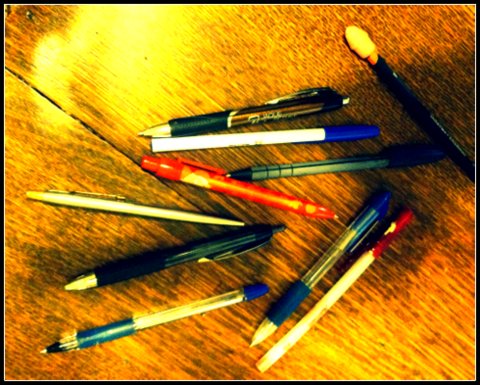
pens1I just stopped. The pen was so faulty in putting ink to paper that I just stopped taking notes. And then I just stopped thinking. And that isn’t much help when you’re actually trying to put thoughts to paper.

I like writing pens that spew copious amounts of ink. It needs to keep up with all the great thoughts bubbling out of my mind of course. Yes, this can create aesthetic problems when one’s writing is already horrible and the ink is now smearing and disfiguring the whole affair. But no one is actually going to read my scrawling notes anyway so there’s really not much downside. I rarely even read them.

But strange how not having the right pen gets in the way. For years I bought cheap pens (because I was cheap and poor) and my creative output suffered. Not the right kind of suffering for art. Now I buy nice pens, which is defined less by price than by how much ink I think will ooze forth. My creativity likes nothing better than some good oozing ink.

Sure, I could go straight to writing with quill and ink and just watch the ideas flow but the numbers of spills would take a toll on everything around me and including me. Though I must say that India ink is fascinating material. I’ve used it on furniture products to produce some deep black otherwise unachievable.

So anyway, I need to go buy some nice pens, having lost the last decent one I had. I don’t use the word “need” lightly. I absolutely need a good pen. It’s essential to have the right tool for the job.

I think this is true for any task or job or pursuit. What the right tool even for the same task might be different for you than for me. The trick I suppose is to try many different tools so that you know the options. A little trial and error can go a long way. And as you improve in your task or pursuit the tool might change. And that’s good.

Of course I had to extend the metaphor a little more to creative expression as a whole.  So just while it might take some trial and error to find the right tool for the task, so just it might take some trial and error to find the write medium for your message. Finding the medium that lets your expression flow freely, just as the ink flow from my pen, should be an exploration as well.

So what’s the point? The point is maybe that if you are struggling to express your creativity in your current medium, you might explore different tools or skills within that medium, or you might explore different mediums, perhaps very related or not related at all.

Which is not to say if your struggling you should give up, because expression will always have some struggle. What it does say though is that exploring other options can open doors to new mediums or can shed new light on the current medium.  Both desirable outcomes.

So I’m going to buy a new pen. And maybe I’ll try a pen I’ve never used before. How audacious. Oh, the places we will go.

Posted in Entertainment, Personality | Tagged , , , , , , | Leave a comment

Methane Wars: A Fable – Chapter Three

good cow wordpress

Biology

While the politics behind the lobbying was interesting, I was curious about the director’s reference to the use of methane collection units on humans. It was clear he was not joking. And if he was not joking, this was no joking matter.

So I did a little poking around. Since I had access to all the company’s previous research files, it didn’t take long to track down the information on the human testing of methane collection units. UnGastro had a sister division called Humachinix Integration. God knows what all they did there. I could find nothing detailed on the company. The company website referred to their work as “bridging the gap between humanity and technology.”

I did find out Humachinix Integration was looking for test subjects for clinical studies on medical devices for collecting human flatulence. And in good form, the description of the study was clinically obtuse: the study was to test a device for collecting human gases so they could pass inspection.

I was test subject #739.

I reported to a live-in clinic. They fitted me with a collection device, a clearly improved but not dissimilar device servicing Farmer Brown’s cows. They gave me some basic instructions on how it worked and let me go. After a few days of being left alone I had my first visit with a research associate.

“Hello there. I’m Doctor Probst. How are we doing today? How long have you been wearing the device?”

“Three days,” I said.

“Very good. You should be wearing one of the new units.”

“They didn’t tell me which unit I was wearing.”

“You don’t need to know. Let’s have a look. Nice. Thank God we have made some improvements since those first devices. The first ones were modeled after some bovine units: highly efficient and durable but certainly not suited to a moody and sensitive human. Nanobots were a stroke of genius for filtering the gases but there’s still that minimal physical presence taken up by tubes and diaphragms. But the body and the mind can adapt, can they not?”

“I’ve seen people adapt to some strange things.”

“Indeed I have as well. Accommodations are OK? Nice. Let’s start with a physical exam. Yes, you can just stand and turn around. These exam gowns actually do have a purpose. Let’s look at the canister and the belt. Belt feels snug enough to keep canisters steady. It’s a little red here. Is there any degree of discomfort here?”

“I can feel the canister. More odd than discomfort.”

“Good, good. A little acclimation will take care of that odd feeling.”

“So, are we testing for comfort? Is that the goal of the study?”

“Comfort is a factor. They are still working on modifications to the canisters so we must continue to monitor their effects. They’ve flattened out these canisters very nicely. We’re down to four canisters: methane, nitrogen, CO2 and miscellaneous. They’re welded together to create one unit. Probably lowest profile and footprint yet. What kind of impact does this have on your daily routines?”

“I mostly notice when I sit on hard things or in confined spaces. Not real flexible. Couldn’t they make these canisters out of something pliable?”

“I think they are working on that. It’s a pressure thing, I believe. So fairly noticeable when sitting on a harder surface. I can see that. Do they catch on or bang into anything?”

“In tighter quarters it catches on things. Like when you catch a belt loop on a door handle.”

“Yes, bound to happen some. We’ll have to see if spatial awareness improves over time. OK, let’s take a look at the tube and the valve. The tube is pretty small. Looks like it snakes its way pretty snugly to the canister. Does this tube ever catch on anything? No. I wouldn’t think it would. It’s pretty low profile.”

“Catches sometimes when I pull on my underwear.”

“Boxers or briefs?”

“Briefs. Good thing I don’t wear a thong.”

“Yes, that’s probably wise. Oh, I see some irritation here. Is this sore? We’ll get you some ointment for that. Should cool it off and provide some lubrication. Make sure it doesn’t get infected too.”

“Aren’t these made out of antibacterial material?”

“Oh, the device is safe that way. It’s more the environment, if you know what I am saying. Snug fit though. Nice adhesion to the buttock skin. Sphincter must have adapted to its presence. Have you gotten used to the valve?”

“If by gotten used to, you mean “doesn’t feel like a tube is shoved up my ass any more,” then no.”

“Right. That would be no. Any better than when it was put in? Hmm. We’ll get that irritation taken care of and then we’ll check again. It might be interfering with sphincter acclimation.”

“So we’re assuming my sphincter is a learning organism? That’s a big assumption.”

“Your body is a learning organism and your sphincter is part of that. It will learn. OK, you can have a seat. Having any tendency to hold it in?”

“It’s kind of hard to let go when you feel like there is an obstruction.”

“That’s normal. Try to relax. Otherwise you’ll get pretty bloated and possibly impacted. If it continues we’ll get you an anti-anxiety cocktail. How’s the cleaning of the unit?”

“A bidet would help.”

“Does the wand need to be more flexible?”

“It’s flexible enough. It needs to be more adjustable. Shorter, longer, different angles.”

“I think we can address that. I’ll have a technician talk to you about your experience.”

“So what’s all this testing for? I’ve heard it’s for medical collection. Who’s designing them?”

“I don’t know who these are being tested for. We do blind studies. It helps reduce the biases that like to sneak in. Medical collection would be a good use. And they could be useful for space travel. And submarines too. Any travel in confined spaces. Tests are going well, so I suppose we’ll find out soon enough.”

That was the end of the first interview, or exam, or whatever it was. He didn’t even bother to see if they’d collected any gas. But I did request the anti-anxiety meds. Whether I pooped or not, I was going to be relaxed.

I hung out for another three weeks. Every couple days they came and collected the canisters. They eventually let me venture out in the world in street clothes. All part of the research.

At the end of the third week, it was time for another exam. Same research associate as before.

“Hello there. Ah, you know the routine.”

“There’s only one thing of interest to look at in this room, Doc.”

“Everything looks pretty good here. Some callouses near the belt. Some pretty good callouses near the valve. No discomfort from the callouses? The body can adapt quite nicely.”

“The redness went away after I put the balm on it. So how many test subjects are there?”

“I don’t know. There are multiple doctors who do exams so I don’t know the count. Stops me from manipulating results. And I couldn’t tell you anyway. It’s confidential.”

“Well, one can’t help but be curious about such things.”

“You are not paid to be curious. You are just paid to wear the device. And you are doing wonderful. Have you been out in public to see how you blend in yet? How did it go?”

“It was awkward. The device all of a sudden seemed huge. Kind of like when you have a bump in your mouth that seems hugely out of proportion to its actual size. I was sure everyone was staring at it.”

“A little self-conscious. Yes, that would be natural. Any comments or looks? Right. Hard to tell who is really looking at you when you are a feeling self-conscious. Have they shared any tests with you on gas content?”

“They just took the canisters. How do they know what to expect?”

“There’s a whole series of averages and calculations based on weight and diet norms.”

“Does that really matter if it’s just for medical collections?”

“Well, we don’t know how the units will be used, but they are checking not only for collection efficiency but also for what they are collecting. Need to make sure they are getting what they are expecting. Make sure the collection isn’t being compromised. Then they’ll develop collection rates based specifically on you.”

That was it for that exam. Seemed more like a social experiment than a medical experiment. I concluded the director wasn’t joking when he speculated that the nuclear option, the plan to roll out the methane collection units to humans, might be on the table. I think he knew it was on the table.

Posted in Methane Wars | Tagged , , , , , , , | Leave a comment

Methane Wars: A Fable–Chapter Two

good cow wordpress

Coal

I forgot about Farmer Brown and his cows. Finding a job at the time was more important so I focused my attention there. Six months later I landed a job with an environmental lobby group. Then the cows came home.

EnviroLobby was primarily a lobbying group. They commissioned environmental studies on behalf of their clients. They put a great deal of effort into gathering data and performing analytics about the studies. I was a research analyst. My first project was an effort on plastics recycling looking at the idea that if you made the collection of plastics easy enough and the repurposing of it efficient enough then plastics usage really didn’t need to decrease.

My second project was on greenhouse gas emissions, or more precisely, on greenhouse gas levels. It was then that the cows came home. The director explained the challenge was that the numbers EnviroLobby quoted in the lobbying efforts for the Coal Elimination Act predicted a much more aggressive decrease. The CEA was the same act that created the Bovine Methane Collection Measure that Farmer Brown was implementing. It was our job to provide research that would support a proposal to not only extend the CEA, but expand its scope.

Lots of groups were trying to measure this. EnviroLobby wasn’t in the business of measuring anything. We were in the business of interpreting data with our client’s needs in mind. For the greenhouse gases we used the results from five different efforts and came up with a blended number. One day I was called into the director’s office.

“These latest reports are very encouraging,” he said. “Great job pulling these together. They actually show a decrease in greenhouse gases. And even better, a slight decrease in demand for coal power. I need to plug these into the five-year trend.”

“The numbers are lower than six months ago,” I said. “But only by a small amount. Six months isn’t long enough to see a downward pattern in data that tends to have ebbs and flows.”

“True. So can you get me a graph of the five-year trend for both emissions and coal usage? I haven’t looked at that view in a while. Let’s see what that does for us. We have to have some movement there, don’t you think? I’m trying to think of the right angle of attack from. How do we present this to amplify any movement that’s occurring?”

“Yes, sir.”

“You see, I’m pretty sure emissions have been decreasing. And even though the percentages are small the physical decreases are enormous, considering the magnitude. But the public and the politicians won’t be swayed by incremental progress.”

“You see,” the director went on, “We don’t have numbers convincing enough to maintain support. If Kramer is voted out of office, there is a good chance that the CEA will not be renewed after its seven- year probation period.”

“So what are we hoping these numbers will tell us? They appear to be stable with maybe a hint of decrease.”

“Well, since we are a lobbying group it is our job to help our client reach its goals.”

“And who is our client?”

“Senator Kramer. He needs something explosive to get the Senate’s attention.”

“And he’s not real picky on the ammunition we give him?”

“He’s looking for something to spark action. So we might take the numbers and say, look here, these readings are not going down, we need to extend and expand the CEA. Or if we start to experience much better numbers, then we talk about how well the project is working and suggest we continue and expand it. Damn. These environmental studies take way too long. What’s the ETA on the Human Methane Impact study?”

“I’ve never heard of that study.”

The Human Methane Impact study looked at how much humans, rather than bovine, contribute to greenhouse gases. They were apparently looking to get the data as a backup. If none of the current numbers provided enough punch, maybe the human impact would get their attention. The idea was to push the scope to include human methane collection and then settle for a continuance of the BMCM.

“Well, we don’t want to go there if we don’t have to. These studies have to pack a big punch or those fickle politicians will turn tail. We might be able to get a big enough punch if we combine the positive impacts of reduced emissions and the decrease in demand for coal power. Show some sort of divergence there. We’ll have to see what the studies tell us but if we quadruple the scope of the collection I can’t see how our projections won’t just explode.”

“Pun intended?”

“There’s still a political problem. Positive numbers don’t motivate politicians to act. Urgency makes them act. The initial passing of the CEA would’ve never happened without a doomsday threat. And our doomsday threat is coal reserves. What’s the latest projection on coal reserves?”

“Seven years.”

“It was seven years four years ago. That will never fly.”

“Well, it’s a tough number to nail down since you’re relying on the energy and mining companies to provide you with that data.”

“Thank God for short-term political memory. It would be better if we could get to six years but maybe a “less than seven” spin will work. Less than seven is almost six and six years is not that long to deal with imminent shutdown of coal plants.”

Back at my desk, I looked up the legislation that was creating so much activity.

The CEA was a lengthy piece of legislation. Probably designed that way to obfuscate any politically unpopular measures included in the bill. The act contained lots of politispeak: course corrections on fossil fuels, controlled redistribution of methane gas release, forward-thinking avoidance of unsustainable fuels and so on.  It contained the obvious references to and funding for alternative energy sources. It was, though, at its most fundamental level concerned with two things: the dwindling coal reserves and greenhouse gases created by fossil fuels and other sources.

Despite its name, there were no measures in the act that called for the elimination of coal. In fact, the act was so deferential to coal that if the research that prompted the act had not come along there would have been no need to bring coal up at all.

But this research study was another matter. In fact, the study had been put out by the very organization I was working for. The study purported there was only seven years’ worth of coal reserves left. And drastic measures were necessary to avert a national and global meltdown.

Among the drastic measures that were implemented, besides the increased funding for wind and solar technologies, was a recommendation based on a sub-study to implement bovine methane collection. The premise, and now practical application, was that the collection of gases from bovine provided two major benefits: it would reduce greenhouse gas emissions (methane and carbon dioxide) and provide a valuable collection of gases that could be used in industry: methane for combustion engines, nitrogen for fertilizers, oxygen for welding or hospitals and so on. Gases that would hypothetically decrease demand for coal.

Strangely enough, this part of the study had been underwritten by a research and development firm called UnGastro, a subsidiary of the non-profit American Coal Awareness Coalition. UnGastro had put millions of dollars into developing the methane collection units.


Posted in Methane Wars | Tagged , , , , , , , , | Leave a comment